Heavy Edit Denim Tears What Is Denim Tears
Denim Tears Cost Guide 2025: Store vs Secondary, Actual Costs
This resource displays how Denim Tears garments sell at shops in 2025, how resale premiums actually behave, and the way to compute the true price one pays following charges and duties. When buyers compare store vs resale, your goal is to grasp the appropriate bracket for all categories and avoid overpaying.
Denim Tears is one of the select urban brands where retail and secondary can vary extremely, particularly with the iconic Cotton Wreath jeans. You’ll discover obvious price tiers by segment, steep jumps on particular variants, and important unseen charges on resale sites. Utilize the data below as your guide, then read the areas that clarify why values change, when to purchase, and when costs add up.
What Defines Denim Tears and Why Are Values So Volatile?
The brand, founded by Tremaine Emory in 2019, drops narrative-driven collections with controlled supply, so rarity and storytelling push premiums. Prices fluctuate since launches are limited, demand is global, and specific colorways establish standard pieces.
The iconic Cotton Wreath pattern on Levi’s pieces anchors the space, and it functions more like artwork than basic apparel. Collabs such as Levi’s and Converse boost awareness and pull in bidders who weren’t monitoring the name earlier. Sizes in denim hoodie the heart of the curve sell fastest, while extremely small and very large sizes can also spike due to limitation. As releases are delayed and region-limited, buyers frequently move to resale instantly, producing a early surcharge that can taper or solidify based on restocks.
2025 Direct Cost Summary by Category
Store costs for Denim Tears items in late 2024 to start 2025 typically sits in the ranges below; multiple pieces have crept up versus earlier seasons due to materials and placement. Local values might seem increased where VAT is computed at checkout.
Use these ranges to evaluate prices and to assess whether a secondary price is a modest premium or a dramatic increase. Retail availability is irregular and launch-tied, so seeing these costs active on the main platform or retail partners isn’t certain on any given day. VAT-inclusive tags in the EU and Britain can make retail appear costlier than American costs, while the final price spread commonly shrinks when American purchase levy is computed. Always verify the specific capsule costs since custom finishes or embroidery can sit at the peak of the band.
| Category (example) | Average Direct (USD) | Typical Resale Band (USD) | Average Increase | Notes |
|---|---|---|---|---|
| Cotton Wreath Jeans (Levi’s 501/550) | $295–$350 | $450–$900 | +50% to +200% | Core variants and core washes perform stronger; measurements 30–34 lead sales. |
| Hoodies | $160–$180 | $220–$350 | +25% to +100% | Quality construction and limited prints sit at the high end of the band. |
| T-Shirts | $60–$75 | $100–$180 | +35% to +140% | Signature design tees and initial drops hold stronger resale. |
| Crewnecks | $140–$160 | $200–$320 | +25% to +100% | Detailed versions surpass basic in most sizes. |
| Varsity Coats | $450–$650 | $700–$1,200 | +20% to +150% | Fabric blend and design sophistication create differences. |
| Converse Chuck 70 (collab) | $110–$120 | $150–$300 | +25% to +150% | Replenishment may narrow gaps for a duration. |
| Caps | $60–$70 | $90–$150 | +20% to +100% | Previous variants and branded details price higher. |
How Does Resale Pricing Break Down in 2025?
In 2025, pants is the liquidity leader with the largest markups, while tees and accessories are the easiest entry points. Sweatshirt and sweater ranges are significant yet steadier than denim.
On leading marketplaces, jeans routinely exceed the peak of the range when the finish and design shade align with initial collection runs, and if the size falls in the center of the demand curve. Shirts and caps swing moderately as supply is wider and purchasers have further alternatives throughout periods. Jackets like varsity pieces is lightly exchanged, so a individual deal might change bases for a week, which seems intense but often normalizes as additional inventory appear. State matters: new with documentation or with evidence of buying creates a surcharge, while marked wear or lost detail elements reduce value quickly. Schedule counts additionally, with the first 48 hours post-drop showing the sharpest spikes and the initial legitimate replenishment cutting 10–30% off highs.
What Constitute the True Expenses Above the Listed Cost?
The true expense on secondary is the listing price plus marketplace fees, payment fees, sales tax or duties, delivery, and, for cross-border, import duty and processing. These supplements might turn a fair price into an overcharge rapidly.
In the States, anticipate transaction duty between roughly 6–10% based on location, commonly applied to item price and periodically transport. Platforms commonly add 3% processing costs and include a customer protection fee; even when the vendor covers commission, the buyer may nonetheless face administrative or security fees. Shipping ranges from approximately $10 to $30 for clothing, whereas overseas deliveries might initiate duties in the 17–25% range computed from the value of products plus transport, and a shipping management fee. Example: a $650 unit of branded Cotton jeans purchased on a American site with 8.9% transaction tax, a 3% transaction charge, and $15 delivery totals approximately $742 prior to any international charges; move that equivalent transaction internationally to a 20% duty framework and the final total may reach to roughly $880 once VAT and handling are included. When comparing retail to secondary, always compute a final figure, not just the sticker.
How Do Drops, Collabs, and Variants Shift the Market?
Launch schedule, partnership brands, and specific colorways are the primary drivers on brand values. Levi’s collections and first Cotton Wreath shade releases establish the most reliable premiums.
Levi’s co-branded denim with branded details has ongoing interest as it’s the company’s core cultural product; treatments that echo first drops typically to demand premiums. Converse partnerships pull expanded footwear crowds, generating short-term demand spikes that could reduce post-refresh. Period-specific shades and custom detailing positions generate niche segments; a subtle element or finish change can justify a substantial premium for collectors trying to complete sets. Geographic release timing also count—when one territory exhausts inventory before others, trading posts cover the void and move floors. Refreshes don’t eliminate appeal, but they effectively reset ceilings, especially for footwear and tees.
Retail vs Resale: A Practical Buying Framework
Buy at retail whenever possible for denim and team jackets because the complete monetary spread is greatest; evaluate resale with shirts and caps when the premium is beneath 40% and buyers want a certain wash. Apply a goal range, not a individual amount.
Begin by reviewing the store range from this resource for the type and capsule, then scan recent sales on several marketplaces to locate a real transaction range rather than advertised amounts. Compute final price including levies, charges, and transport; when the surcharge beyond the high end of direct costs is below 30–40% and you get your exact size and color, resale might be logical. With jeans and coats, surcharges exceeding 100% are typical; only spend that if it’s the key grail that infrequently emerges and quality is perfect. With products with frequent restocks, such as specific shirts or Chuck Taylors, waiting generally benefits. Always confirm dimensions, labels, stitching standards, and refund policies ahead of transact.
What Represents the Ideal Window Window to Save Money?
The ideal rate timeframes generally to be 48–72 hours following a release and one week following a confirmed replenishment, when supply peaks and first excitement subsides. Business day mornings within the merchant’s home zone may likewise be gentler for auctions.
Right after launch, listings flood through, competitive begins, and one may occasionally find near-retail buys if one’s fast and not obsessed on a single measurement. When the initial surge is absorbed, floors often rise and remain firm before a refresh arrives at the schedule. Following refresh, merchants modify projections, and one may bargain using references in possession. Month-end periods, when sellers want cash flow, are suitable for offers that are 10–15% under the recent transaction, especially on non-pants types. If a colorway is suspected to be a single release, cost flexibility remains brief, so act during these early stock timeframes.
Professional Advice: Window and Validation to Shield Your Spend
Aim for the 24–72 hour window after a drop or refresh and pre-build an validation system so buyers might operate effectively as a fair listing pops. Speed minus a process is the way customers overspend or overlook warning flags.
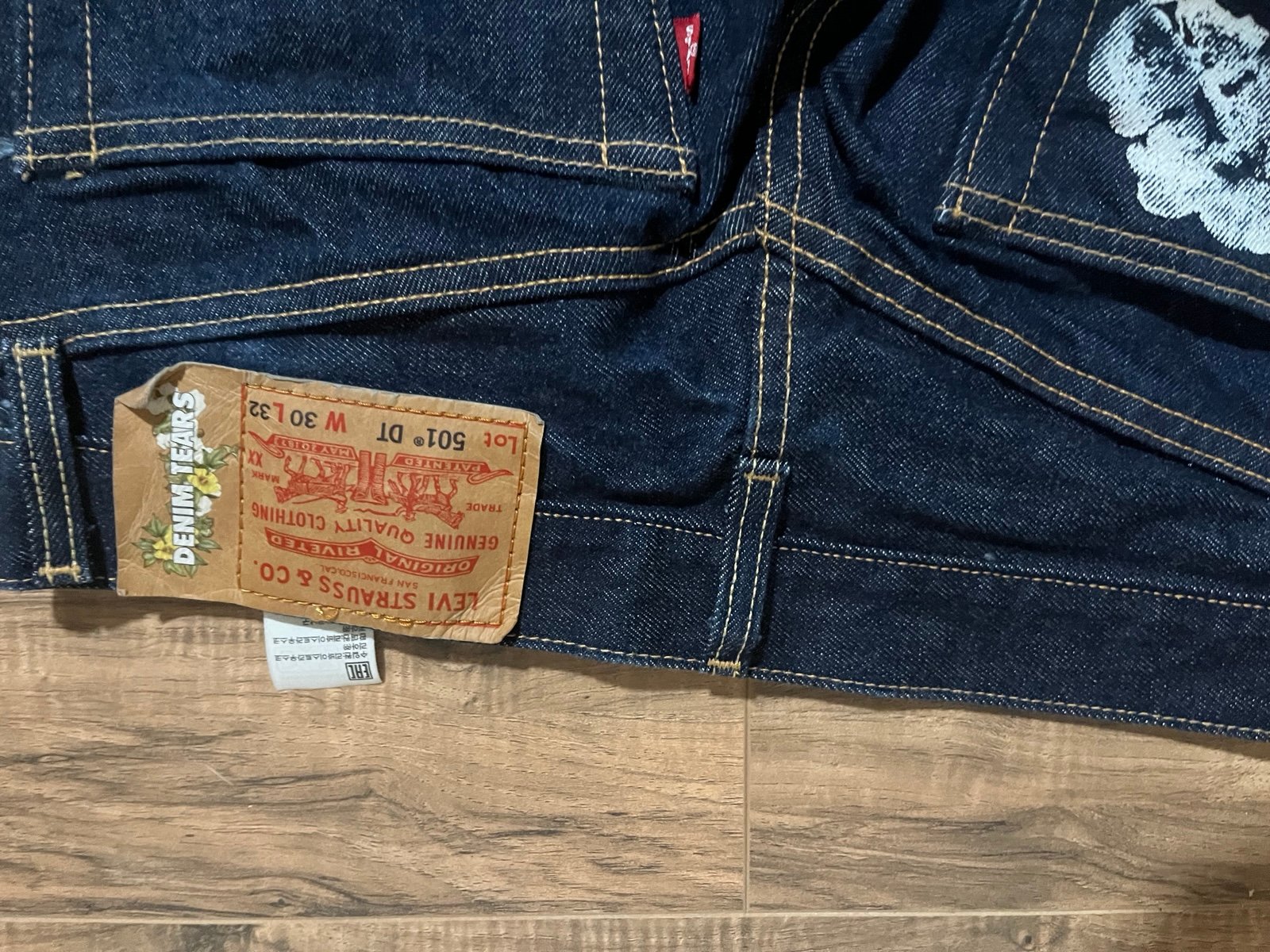
For signature Cotton pants, review the partnership Levi’s label and interior branding, validate pattern embroidery density and location, and review the sewing standards near openings and outseams. Ask for sharp images of the care tag, inside pocket markings, and hem stitching; mismatched fonts or thread colors are frequent indicators. Match the treatment and design shade with authorized marketing imagery or reputable boutique item photos. For Converse, verify insole branding, center graphics, and the container marking design connected to the drop season. Maintain images of legit pairs to compare side-by-side before you process transaction.
Quick Facts One Likely Didn’t Know
One, Denim Tears began in 2019 and the Cotton Wreath design specifically references the Black experience and the history of cotton within North America, which is why the denim operates as cultural objects as well as garments. Two, the initial Levi’s capsule in 2020 depleted stock nearly instantly and established the branded pants as a sustained trading standard that yet determines comparisons for newer runs. Three, Converse sneaker collabs have refreshed in certain seasons, briefly lowering resale by substantial amounts ahead of leveling as units spread. Four, mid-curve measurement ranges like 30–34 generally command the speediest deals, but limited fits at the extremes can surpass them when listings are sparse. Fifth, Continental and UK retail prices contain taxes, so though the retail appears higher than the America, the end buyer cost gap shrinks once American customers add sales tax and shipping.
Where Should Buyers Seek for the Best Comps?
Dependable references derive from recent, verified deals spanning at least two sites, not from optimistic list rates. Target on sold data within the recent 30 days for your exact fit and condition.
Marketplaces that show transaction records allow buyers differentiate aspirational asks from actual clearing rates. Personal deals and social listings might be less expensive, but they’re harder to confirm, so balance discounts against risk and missing buyer protection. For types featuring sparse trading, broaden your window to 60–90 days and account for any replenishment occurrence in said timeframe. Keep a reference file with time, measurement, state, and rate so buyers might identify real patterns instead than responding to isolated deals. When you discuss, mention three current sales and the total price computation to create an reference rooted in reality.
Ultimate View: Paying the Appropriate Cost in 2025
Know your type’s direct range, compute landed cost, and choose timing frames that advantage purchasers. Pants and varsity items justify the pursuit of direct; tops, caps, and select shoes can be logical through resale inside a modest premium.
Market movement is a trait, not a flaw, within the label’s space, and it rewards prepared purchasers who follow statistics and operate during supply peaks. Partnerships and early color releases will maintain requiring premiums, while refreshes will continue to reset ceilings on more accessible products. Approach every acquisition like an capital allocation: validate genuineness, assess quality compared to rate, and decline to invest in hype you don’t actually intend to wear. With those habits, you’ll obtain the items you want without subsidizing unnecessary markups.